
OG Hyperbaric Professional Network
Your clinical judgment.
A team to
support you.
A direct channel to refer patients for a hyperbaric therapy assessment, coordinate their care and maintain continuity with you as their treating professional.
Hiperbárica Costa Rica · Curridabat · +506 6027-6870
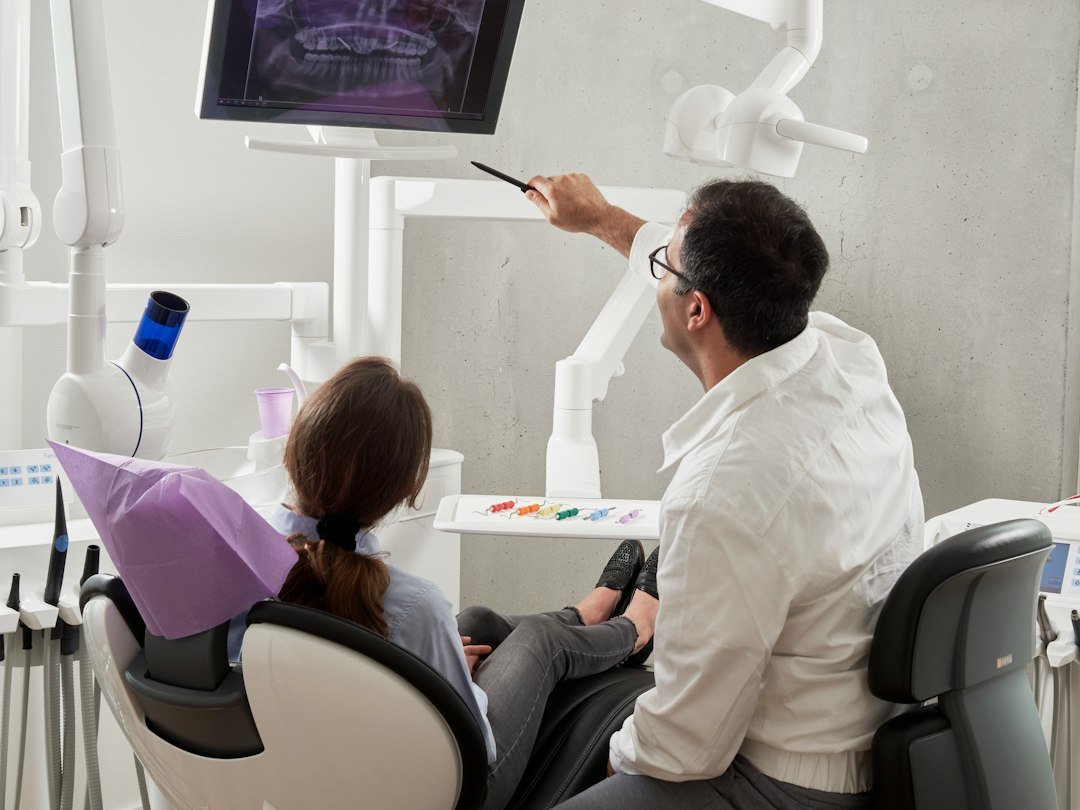
We complement your care.
You remain
the treating professional.
Our professional referral network
An extension
of your care.
The program facilitates referrals from dentistry, oral surgery, wound care, surgery, oncology, radiation oncology, orthopedics, sports medicine and other disciplines. Each request is received for individual assessment.
Your clinical relationship continues
The patient remains under the primary care of their referring professional. The hyperbaric component is integrated when appropriate.
Assessment before starting
The indication, medical history, safety and technical capabilities needed for each case are reviewed.
One coordination channel
Scheduling, preparation and patient guidance are coordinated through Hiperbárica Costa Rica’s professional channel.
Feedback to the referrer
We can confirm receipt and share a summary of completed sessions when appropriate and with the patient’s authorization.
From first contact to follow-up
Refer in
five clear steps.
We coordinate receipt and assessment through the professional channel. Before sharing clinical information, confirm the patient’s authorization and the designated method for sending it.
Start coordinating →Contact the professional channel
Message +506 6027-6870 with your name, specialty and center. We will guide you through the referral requirements.
We coordinate with the patient
With their authorization, we contact the patient to arrange the assessment and explain preparation.
We assess suitability
The indication, medical history, safety and technical scope are reviewed before determining whether starting is appropriate.
The indicated sessions take place
When the case is suitable for the service, the plan is individualized according to the responsible professional’s judgment.
Continuity and feedback to the referrer
The patient continues primary care with you. A care summary may be shared when appropriate and with authorization.
Based on our professional referral form
Information that supports
a better assessment.
Prepare a brief, relevant referral. Your first message can simply identify you as a professional; we will then coordinate the transfer of patient information.
01 · Referring professional
Name, specialty, center or clinic, phone and coordination email. Date and signature or stamp on the referral form.
02 · Patient and authorization
Name, age and contact details needed for the assessment, with authorization to contact the patient. Indicate whether they authorize feedback to the referrer.
03 · Reason and objective
Diagnosis or condition, related procedure and date, consultation objective and the clinical question you want addressed.
04 · Medical history and coordination
Medication, allergies, relevant medical history, available studies, clinical priority and availability. The referral channel does not replace an emergency service.
An annotated clinical library
Literature for
informed decisions.
A selection of guidelines, reviews and trials. Each publication should be interpreted in light of its population, pressure, inspired oxygen fraction, duration and outcome studied.
Physiological basis
Increasing oxygen partial pressure increases oxygen dissolved in plasma and the diffusion gradient toward tissues. Effects on redox signaling, leukocyte response and neovascularization have been described. [1]
From mechanism to outcome
Biological plausibility is a starting point. Clinical usefulness is determined by studies of the specific condition and protocol; cellular effects do not guarantee a benefit in every patient. [1]
Diabetic foot ulcers
IWGDF · Wound healing interventions guideline, recommendation 12.
- Population and protocol
- Ischemic or neuroischemic ulcers that do not heal with standard care.
- Finding or recommendation
- Considers HBOT as an adjunct when resources are available to offer it. A conditional recommendation with low-certainty evidence.
- Clinical interpretation
- Requires clinical selection and comprehensive wound care; it does not extend to every ulcer or device.
Late radiation tissue injury
Lin and colleagues · Cochrane Database of Systematic Reviews.
- Population and protocol
- 18 studies with 1,071 participants on late tissue injury from radiation therapy.
- Finding or recommendation
- Suggests improvement in some head and neck, bladder and rectal tissues. Certainty for the relevant outcomes is low to moderate.
- Clinical interpretation
- Effects depend on the tissue and context; barotrauma and visual changes are also reported. Selection and dose remain important.
Radiation cystitis: RICH-ART
Oscarsson and colleagues · eClinicalMedicine.
- Population and protocol
- Five-year follow-up after 30–40 sessions of 100% oxygen at 240–250 kPa for 80–90 minutes.
- Finding or recommendation
- Improvements in patient-reported urinary symptoms were maintained during follow-up.
- Clinical interpretation
- The control group later received HBOT; the follow-up phase does not retain a long-term controlled comparison. This protocol requires a different pressure range.
Dentoalveolar surgery: HOPON
Shaw and colleagues · International Journal of Radiation Oncology, Biology, Physics.
- Population and protocol
- Extractions or implants in an irradiated mandible: 144 patients randomized and 100 analyzed for the primary outcome; 30 sessions at 2.4 ATA.
- Finding or recommendation
- Osteoradionecrosis at six months occurred in 6.4% with HBOT and 5.7% in the control group, with no demonstrated preventive benefit.
- Clinical interpretation
- Helps distinguish a selected indication from routine prophylaxis. It does not justify automatically recommending HBOT for every extraction or implant.
Compromised grafts and flaps
Francis and Baynosa · Advances in Wound Care.
- Population and protocol
- Tissues with compromised perfusion or viability after reconstruction.
- Finding or recommendation
- Reviews adjunctive HBOT to salvage selected grafts and flaps, together with correction of the cause of compromise.
- Clinical interpretation
- Does not propose HBOT for healthy grafts or flaps. Acute compromise requires timely surgical assessment and appropriate hyperbaric capabilities.
Athletic performance
Hadanny and colleagues · Sports Medicine – Open.
- Population and protocol
- 37 athletes aged 40–50 randomized; 31 analyzed. The study used 40 sessions of 60 minutes at 2 ATA with 100% oxygen.
- Finding or recommendation
- Improvements in VO₂max and mitochondrial variables were observed compared with the sham group.
- Clinical interpretation
- A small sample and a specific protocol. It does not demonstrate faster injury recovery or the same effect with 1.5–1.7 ATA or plans of 5–10 sessions.
Dose and technical capabilities matter
An informed referral
starts with the scope.
At Hiperbárica Costa Rica, we use the OXY SPACES S-190C chair-style chamber with a reported pressure range of 1.5–1.7 ATA. Acceptance of a referral depends on whether the service is appropriate for that case.
| Variable | Referral consideration |
|---|---|
| Pressure and oxygen | Document pressure, oxygen delivered and the delivery system. A range of 1.5–1.7 ATA is not equivalent to the protocols of 2 ATA or more in many studies or to the clinical definition published by UHMS. [2] |
| Indication and level of care | When the diagnosis requires different equipment or hospital capabilities, a specialist hyperbaric service is appropriate. Urgent care must not be delayed to arrange an outpatient referral. |
| Safety and consent | Review medical history, suitability, contraindications and informed consent. Supervision, maintenance and fire prevention should follow the manufacturer’s instructions. [9] |
| Follow-up and sessions | Goals, duration, frequency and number are individualized. Commercial plans of 5 or 10 sessions do not determine the clinically indicated dose. |
Coordination between professionals
What you need to know
before referring.
The relationship is built on a clear clinical question, relevant information and continuity of care.
Does my patient remain under my care?
Yes. The program keeps the referring professional in charge of the primary treatment. Our component is limited to hyperbaric assessment and care when appropriate.
Can I request information about the sessions?
We can confirm receipt and share a summary of care when appropriate and authorized by the patient. Include your professional contact details in the referral.
Does every referred patient start sessions?
A referral initiates an assessment. The indication, safety and technical capabilities determine whether the service is appropriate or specialist care is needed.
Are there collaboration options for clinics?
You can ask coordination directly about the professional program and current terms. Agreement terms are determined before contracting services. Ask about collaboration for your clinic.
How do I receive the program materials?
Request the OG Hyperbaric Professional Network kit and patient referral form through the professional channel. The materials organize the required information and coordination process.
Hiperbárica Costa Rica
Let’s talk about
the next referral.
Curridabat, San José · Professional channel +506 6027-6870
Scientific references and review date
Editorial selection consulted on October 15, 2026. The literature describes its own protocols and populations; it does not certify the center or equipment. Clinical decisions and individual assessment are the responsibility of the treating professional.
- Thom SR. Hyperbaric oxygen: its mechanisms and efficacy. Plast Reconstr Surg. 2011;127 Suppl 1:131S–141S. PMID 21200283 · Full text.
- Undersea and Hyperbaric Medical Society. Clinical definition and indications for hyperbaric oxygen.
- IWGDF · Wound healing interventions guideline, recommendation 12. Diabetic foot ulcers · IWGDF 2023 guideline · Recommendation 12.
- Lin and colleagues · Cochrane Database of Systematic Reviews. Late radiation tissue injury · DOI: 10.1002/14651858.CD005005.pub5.
- Oscarsson and colleagues · eClinicalMedicine. Radiation cystitis: RICH-ART · DOI: 10.1016/j.eclinm.2025.103214.
- Shaw and colleagues · International Journal of Radiation Oncology, Biology, Physics. Dentoalveolar surgery: HOPON · DOI: 10.1016/j.ijrobp.2019.02.044.
- Francis and Baynosa · Advances in Wound Care. Compromised grafts and flaps · DOI: 10.1089/wound.2016.0707.
- Hadanny and colleagues · Sports Medicine – Open. Athletic performance · DOI: 10.1186/s40798-021-00403-w.
- FDA. Follow Instructions for Safe Use of Hyperbaric Oxygen Therapy Devices. Letter to healthcare providers, August 25, 2025.